Kuroza Platform
All Features, One Flow
Kuroza is designed to move your group from “should we do something?” to a confirmed plan with less friction, clearer decisions, and higher follow-through.
Planning Reality
Why most group plans stall
Most groups don’t fail because they lack ideas. They fail because timing is unclear, communication is fragmented, and decision quality drops as message volume rises.
Kuroza is built as a sequence that resolves those points in order. Each step reduces uncertainty, so by the time a decision is needed, the group is choosing between realistic options instead of debating from scratch.
This is a systems problem, not a motivation problem. Kuroza focuses on the system: first align time, then coordinate context, then narrow location choices, then suggest events with high acceptance probability.
The workflow
One clean progression from availability to a plan people actually attend.
Availability baseline -> coordinated context -> fair location options -> automatic event suggestions -> confirmation.
The key principle is dependency order: each stage provides signal quality for the next stage, so suggestions improve as context improves.
Step 1
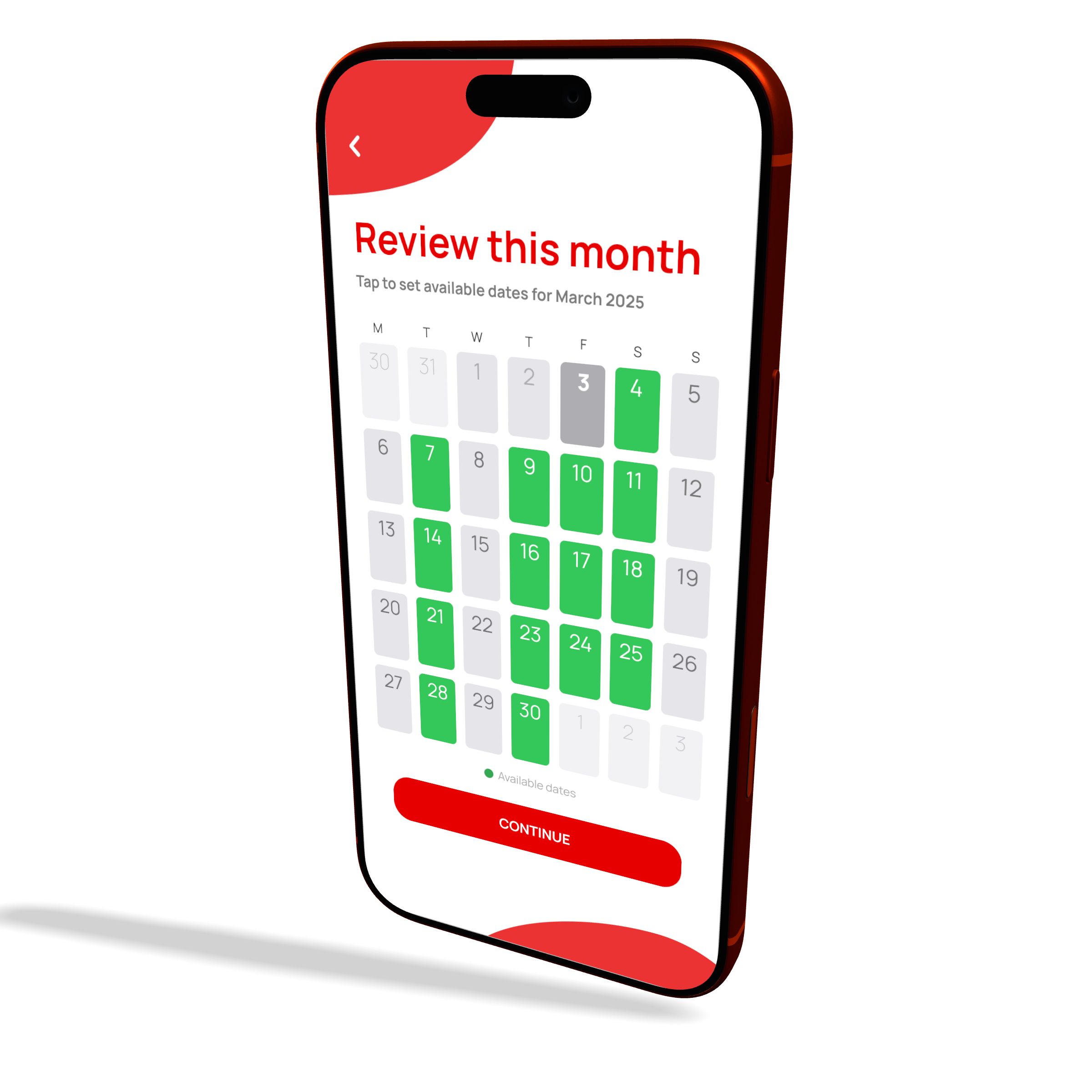
Availability Sharing
Each member shares availability once. Kuroza continuously surfaces overlap windows so planning starts from what is actually possible.
Insight: this removes the highest-friction phase in group chats, where timing ambiguity prevents progress.
Signals used: free/busy windows, hard constraints, recurring behavior, and participation thresholds.
Why this is effective: most groups waste time discussing slots that were never feasible. Kuroza narrows attention to valid windows only.
Typical result: planning conversations start with actionable options instead of timing negotiation.
Step 2
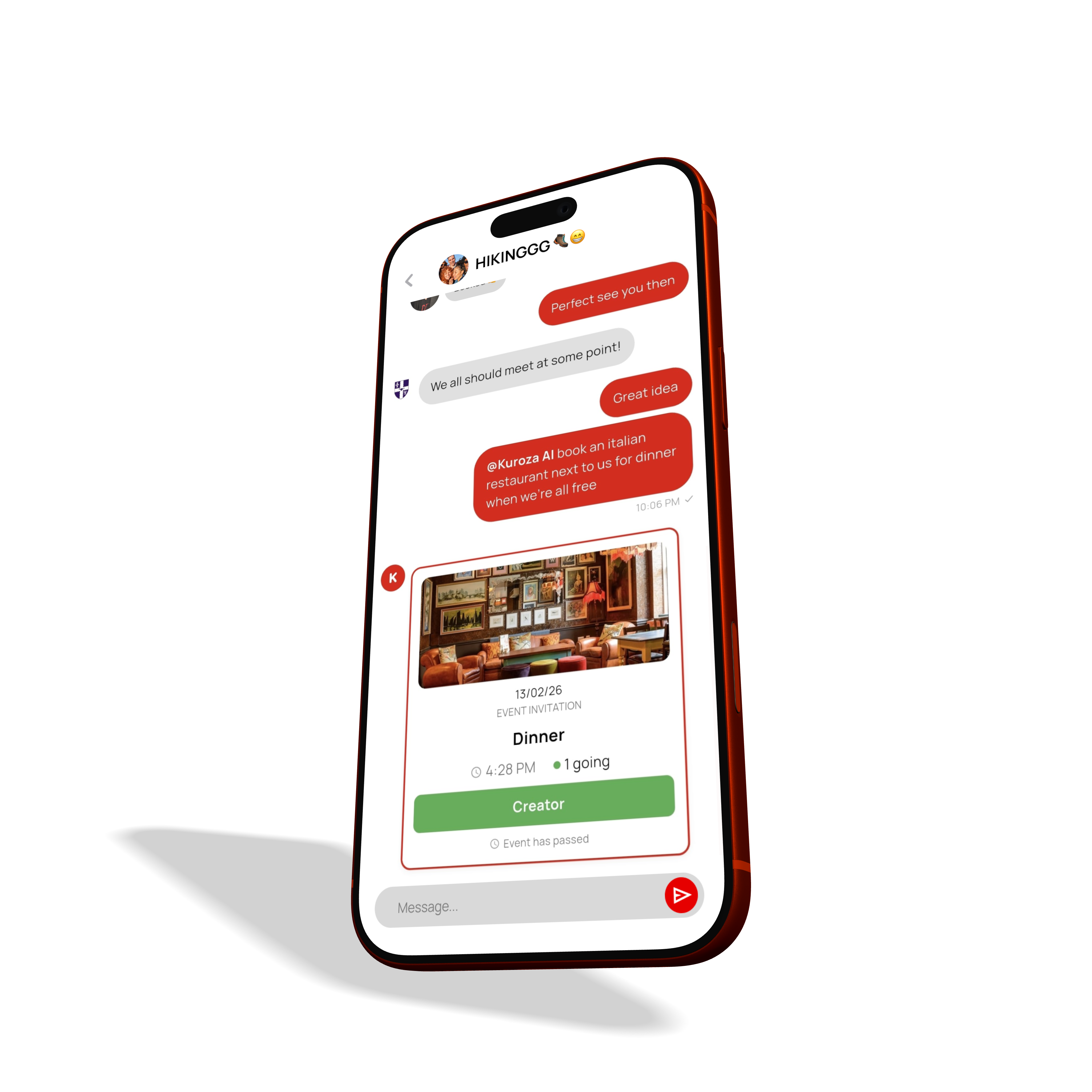
Plan and Coordinate in One Place
Discussion stays tied to the actual plan. Members align details, track updates, and confirm decisions without losing context across apps.
Insight: reducing context switching lowers drop-off and raises decision clarity.
What is consolidated: conversation, decision history, updates, and confirmation state.
Why this is effective: fragmented threads create rework and inconsistent understanding. A single planning context reduces ambiguity.
Typical result: fewer repeated questions and faster agreement on final details.
Step 3
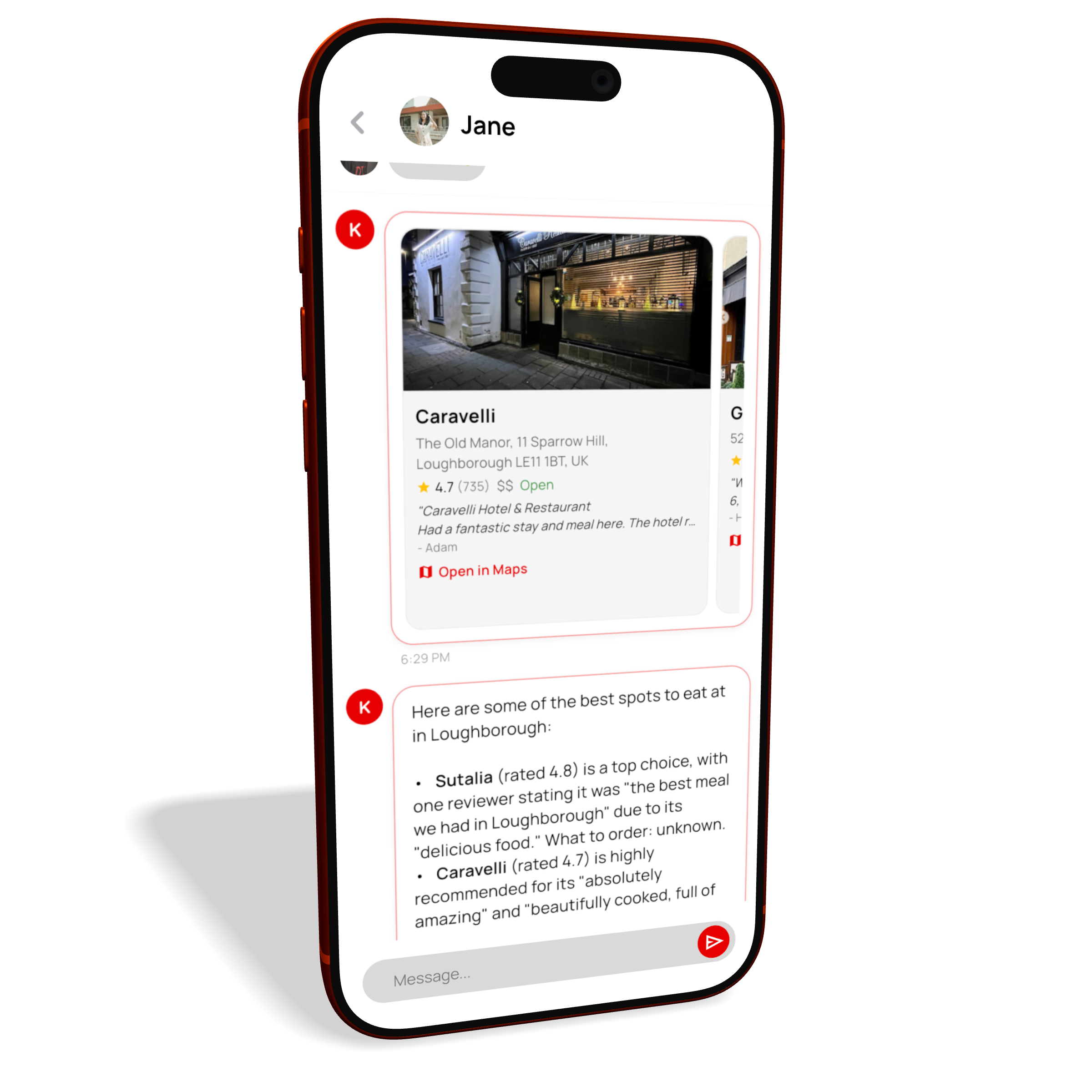
Real-Time Location Suggestions
Kuroza suggests meeting spots that balance convenience for the group as a whole, not just the nearest person.
Insight: location fairness is one of the strongest predictors of attendance consistency.
Decision factors: relative travel effort, venue relevance, timing constraints, and group context.
Why this is effective: when one member consistently absorbs the travel burden, attendance drops over time. Fairness improves commitment.
Typical result: faster venue decisions with fewer objections late in the planning cycle.
Step 4
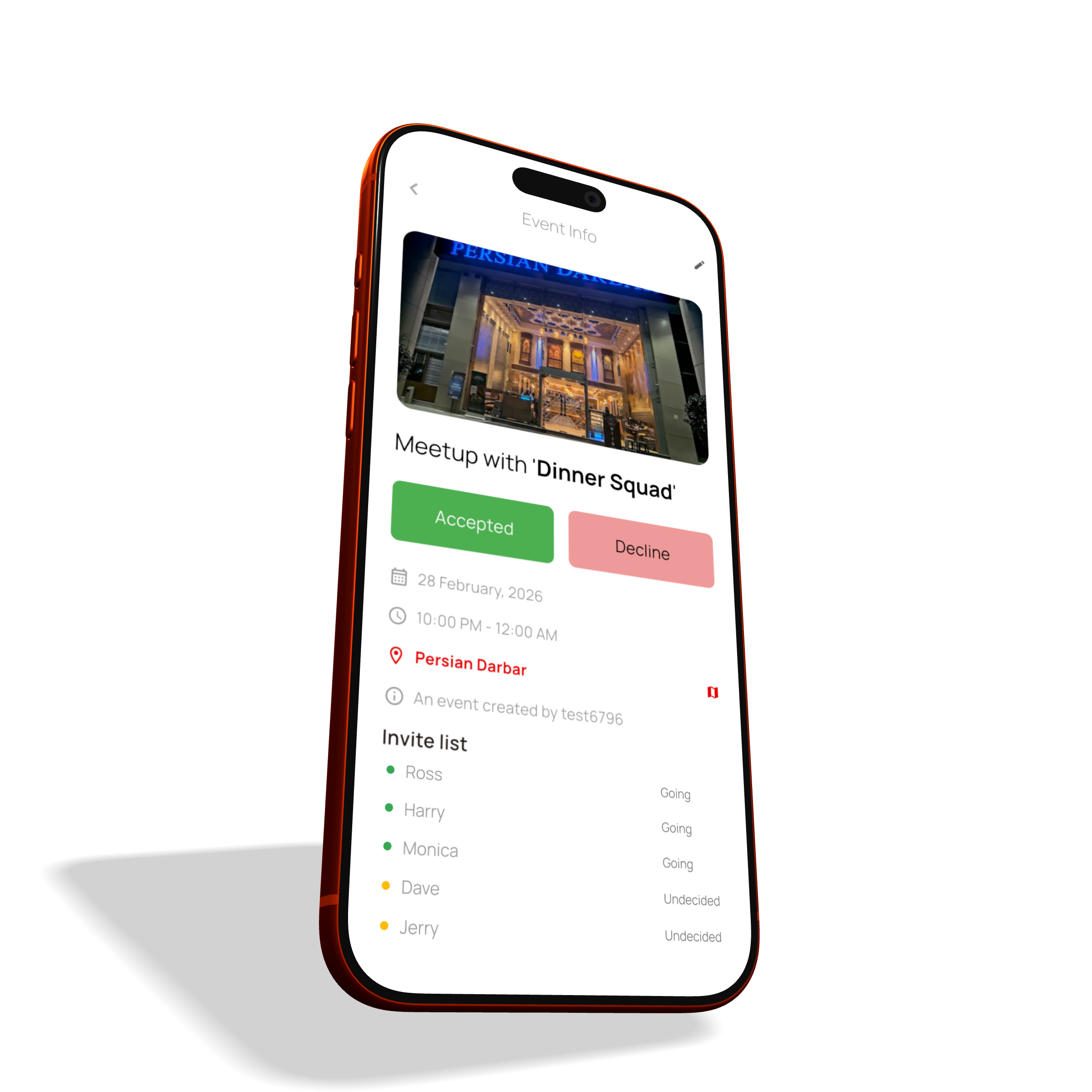
Automatic Event Suggestions
Kuroza proposes event options using timing signals and preference history, giving the group high-quality options immediately.
Insight: better suggestions reduce decision fatigue and improve acceptance rate.
Signals used: prior accepted plans, activity patterns, availability confidence, and recency effects.
Why this is effective: generic ideas force extra filtering. Context-aware suggestions shorten the path to a final yes.
Typical result: groups spend more time choosing among good options and less time generating options from scratch.
What changes in practice
Lower planning overhead
Fewer repetitive messages and fewer dead-end branches in conversation.
Higher decision quality
Choices are grounded in real availability, context, and group preferences.
More confirmed plans
Clearer coordination means higher follow-through and fewer last-minute drop-offs.
In short: Kuroza doesn’t just help groups talk about plans. It improves the decision system behind planning, so more ideas become real events.
Ready to plan with less friction?
Download Kuroza and move from idea to confirmed plan in fewer steps.

